
Smart TV Power Consumption: It’s Not Just ACs and Coolers—Your Smart TV Can Increase Your Electricity Bill Too
When electricity bills rise, most people immediately blame air conditioners, coolers, or refrigerators. However, many overlook another device that runs for hours every day—your Smart TV.
MP Kesari Desk: With the growing popularity of OTT platforms, online streaming, gaming, and internet-based entertainment, Smart TVs have become a central part of modern households. While they consume far less power than an AC, continuous daily usage can still have a noticeable impact on your monthly electricity bill.
How Is Smart TV Power Consumption Calculated?
The amount of electricity a Smart TV consumes depends on several factors, including:
- Screen size
- Display technology (LED, QLED, OLED, Mini LED, etc.)
- Brightness settings
- Viewing duration
- Gaming and streaming activities
- Built-in smart features and apps
Generally, larger TVs with higher brightness levels consume more electricity than smaller models.
For example:
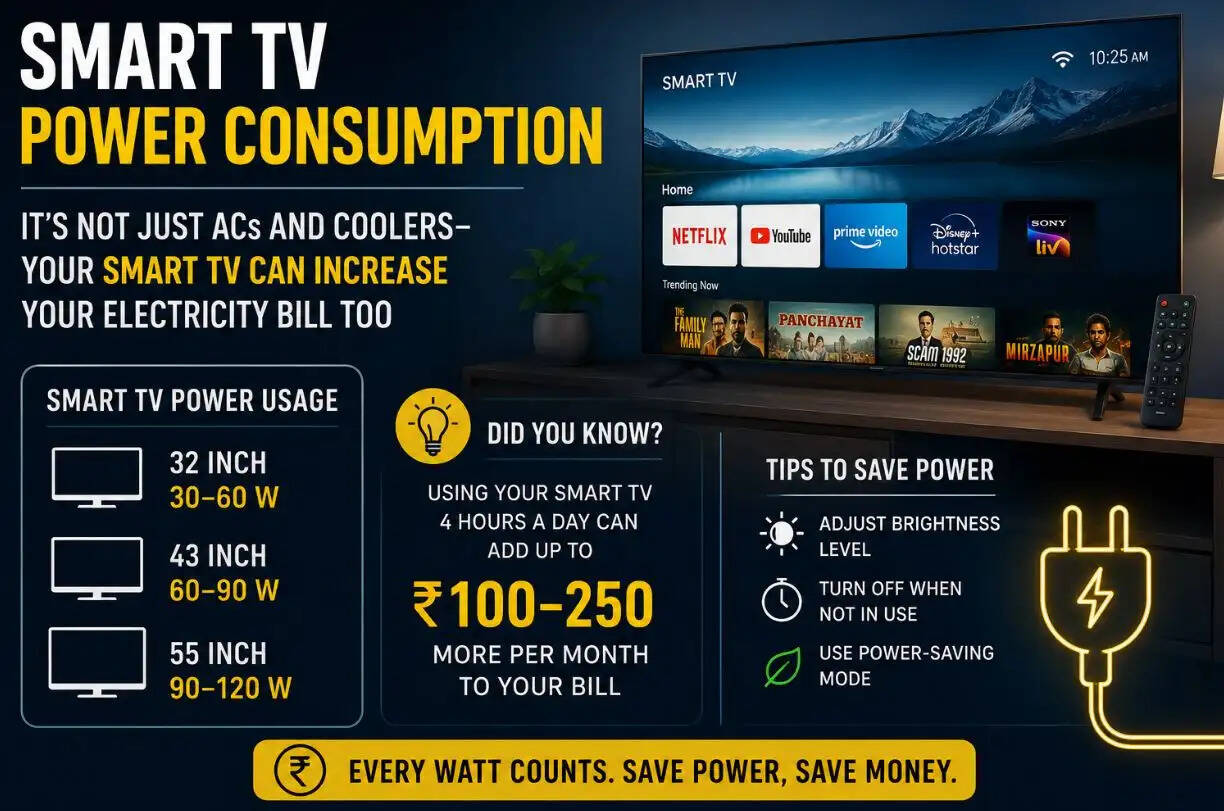
- A typical 32-inch LED TV may consume around 30W to 60W per hour.
- A 43-inch to 55-inch Smart TV usually consumes between 50W and 120W per hour.
- Some premium large-screen models can consume 300W to 500W under certain conditions, especially when running at maximum brightness or using advanced display technologies.
How Much Electricity Does a Smart TV Use Per Hour?
Electricity consumption is measured in kilowatt-hours (kWh), commonly known as units of electricity.
A Smart TV consuming 100 watts of power uses:
- 0.1 kWh (0.1 unit) in one hour
- 0.8 units if used for 8 hours a day
While this may seem small, the numbers add up over time.
How Much Can a Smart TV Increase Your Monthly Electricity Bill?
Let's take a simple example:
100W Smart TV
- Daily usage: 8 hours
- Daily consumption: 0.8 units
- Monthly consumption: 24 units
If electricity costs ₹8 per unit, the monthly expense would be:
24 × ₹8 = ₹192 per month
55-Inch or Larger Smart TV
A larger TV may consume 25 to 35 units per month when used for around 8 hours daily.
At ₹8 per unit:
- 25 units = ₹200
- 35 units = ₹280
Depending on your local electricity tariff and usage pattern, the cost can be even higher.
Why Smart TVs Consume More Power Today
Modern Smart TVs are no longer used only for watching cable channels.
Many households now use them for:
- Netflix
- Amazon Prime Video
- YouTube
- Disney+ Hotstar
- Cloud gaming
- Web browsing
- Video calling
- Screen mirroring
Since these activities often keep the TV running for extended periods, electricity consumption naturally increases.
Tips to Reduce Smart TV Electricity Usage
If you want to keep your electricity bill under control, follow these simple tips:
Adjust Brightness Settings
Keeping brightness at unnecessarily high levels increases power consumption. Lower it to a comfortable viewing level.
Enable Energy Saving Mode
Most Smart TVs include Energy Saver or Eco Mode, which helps reduce electricity usage.
Turn Off the TV When Not in Use
Avoid leaving the TV running in the background when no one is watching.
Reduce Standby Power Consumption
Switch off the power source completely instead of leaving the TV in standby mode for long periods.
Choose Energy-Efficient Models
When purchasing a new TV, look for energy-efficient Smart TVs with better power ratings.
Final Thoughts
A Smart TV may not consume as much electricity as an air conditioner or cooler, but regular daily use can still add a significant amount to your monthly power bill. The actual consumption depends on factors such as screen size, display technology, brightness level, and usage duration.
By using energy-saving settings, managing brightness, and avoiding unnecessary screen time, you can enjoy your favorite entertainment while keeping electricity costs under control.