
ATM PIN Can Be Stolen Through Heat Traces! Know How Thermal Scanning Fraud Works and How to Stay Safe
As banking technology evolves, fraudsters are also finding new ways to target unsuspecting users. A growing concern among cybersecurity experts is a technique known as ATM thermal scanning, which can potentially help criminals guess an ATM user's PIN by analyzing heat traces left on keypad buttons.
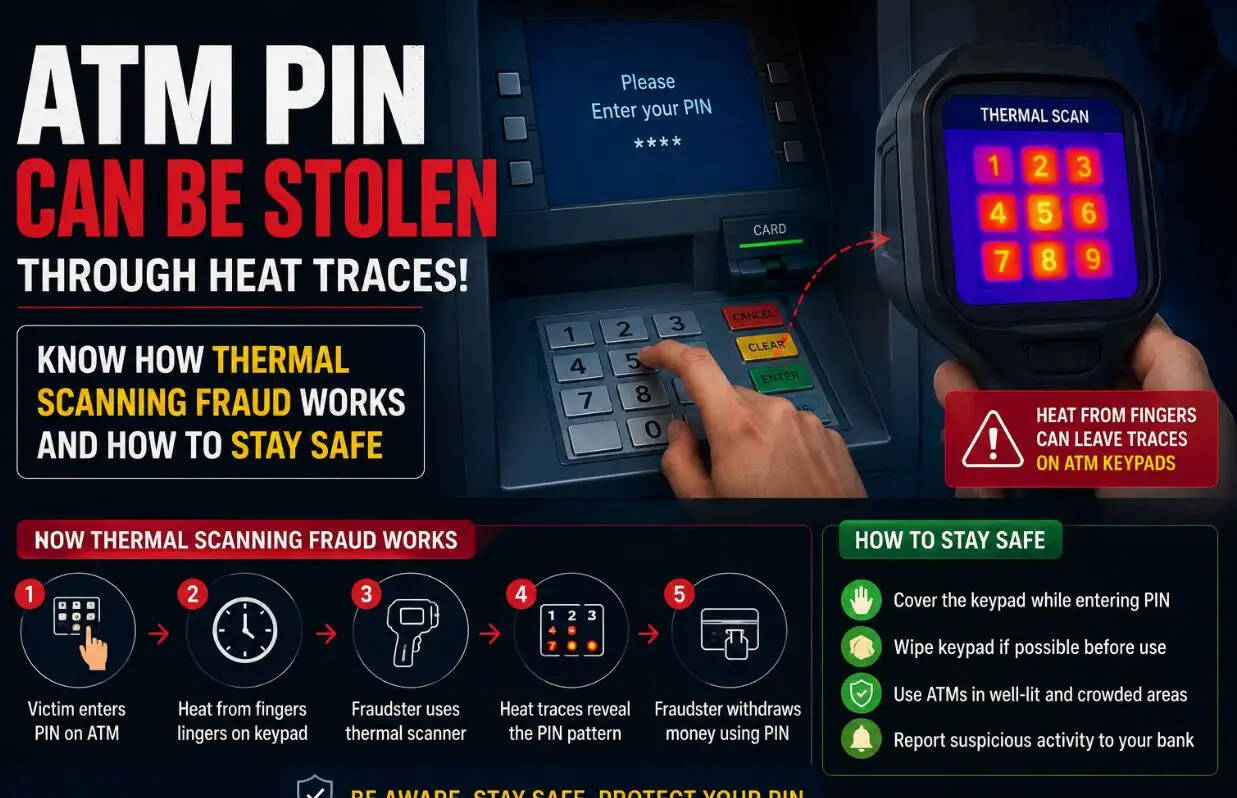
MP Kesari News Desk: While this method is not foolproof and does not directly reveal a PIN, experts warn that it could still pose a security risk if combined with other forms of fraud. Understanding how this scam works can help users take simple precautions to protect their money and personal information.
What Is ATM Thermal Scanning?
Thermal scanning is a technology that detects heat signatures left behind on surfaces. When a person enters their ATM PIN, their fingertips leave temporary heat traces on the keypad buttons they touch.
Using specialized thermal imaging cameras or infrared scanning devices, a fraudster may attempt to identify which buttons were pressed most recently.
Although the technology cannot instantly reveal the exact PIN, it may provide clues that help criminals narrow down possible combinations.
How Does the Thermal Scanning Scam Work?
The scam typically relies on speed and timing.
After a customer completes an ATM transaction and leaves, a fraudster may quickly approach the machine and use a thermal imaging device to scan the keypad.
The process generally works like this:
- The scanner detects heat remaining on recently pressed buttons.
- Buttons with stronger heat signatures may indicate the last numbers entered.
- Cooler buttons may represent earlier key presses.
- By analyzing the heat pattern, criminals try to identify the digits used in the PIN.
For example, if thermal scanning suggests that the numbers 3, 4, 7, and 8 were pressed, a fraudster may attempt multiple combinations using those digits.
While this does not guarantee success, it significantly reduces the number of possible PIN combinations.
Can Criminals Really Steal Your PIN This Way?
Security experts emphasize that thermal scanning is not always accurate.
Several factors can affect the effectiveness of the technique, including:
- Ambient temperature
- Time elapsed after the transaction
- Keypad material
- Weather conditions
- Finger pressure and contact time
However, in certain situations, thermal imaging can provide enough information to assist criminals, especially if they already have access to a stolen or compromised ATM card.
This is why cybersecurity professionals consider thermal scanning a potential security threat.
Plastic vs Metal ATM Keypads: What's the Difference?
The material used in an ATM keypad plays an important role in how long heat traces remain visible.
Plastic Keypads
- Retain heat for a longer period.
- Thermal patterns may remain detectable for several seconds or even minutes.
- Easier for thermal cameras to analyze.
Metal Keypads
- Dissipate heat much faster.
- Cool down quickly after being touched.
- More difficult for thermal imaging devices to read accurately.
Because of this, metal keypads generally provide better protection against thermal scanning attacks.
How to Protect Yourself from ATM Thermal Scanning Fraud
Fortunately, a few simple habits can greatly reduce the risk of becoming a victim.
Cover the Keypad While Entering Your PIN
Always use your free hand to shield the keypad while entering your PIN. This protects against both thermal scanning and hidden cameras.
Touch Additional Keys After Completing the Transaction
After entering your PIN or finishing the transaction, lightly press or touch a few random buttons. This creates additional heat signatures and makes it more difficult to determine which keys were actually used.
Choose Safe ATM Locations
Use ATMs located inside bank branches or well-monitored areas whenever possible.
Stay Alert to Suspicious Activity
If someone appears unusually interested in your transaction or is waiting close to the ATM, consider using another machine.
Never Share Your ATM PIN
No bank employee or authorized representative will ever ask for your PIN.
Change Your PIN Regularly
Updating your PIN periodically can reduce the impact of any compromised information.
Monitor Bank Alerts
Always review SMS notifications, email alerts, and transaction messages after using your ATM card.
Additional ATM Safety Tips
To improve overall banking security, follow these best practices:
- Inspect the ATM for unusual attachments or devices.
- Avoid isolated ATMs late at night.
- Cover the keypad every time you enter your PIN.
- Keep your ATM card secure at all times.
- Report suspicious transactions immediately.
- Contact your bank if your card is lost or stolen.
Should You Be Worried?
Thermal scanning is still considered a relatively uncommon fraud technique, and successfully stealing a PIN using heat traces alone can be difficult. However, as criminals continue to experiment with advanced technologies, users should remain vigilant.
Simple precautions such as covering the keypad, touching extra keys, and monitoring account activity can significantly reduce the risk and help keep your bank account secure.